Power · UK
Build an astrophotography power budget that survives the night
Calculate voltage, peak current, connectors and cold-weather reserve for a dependable portable imaging setup.
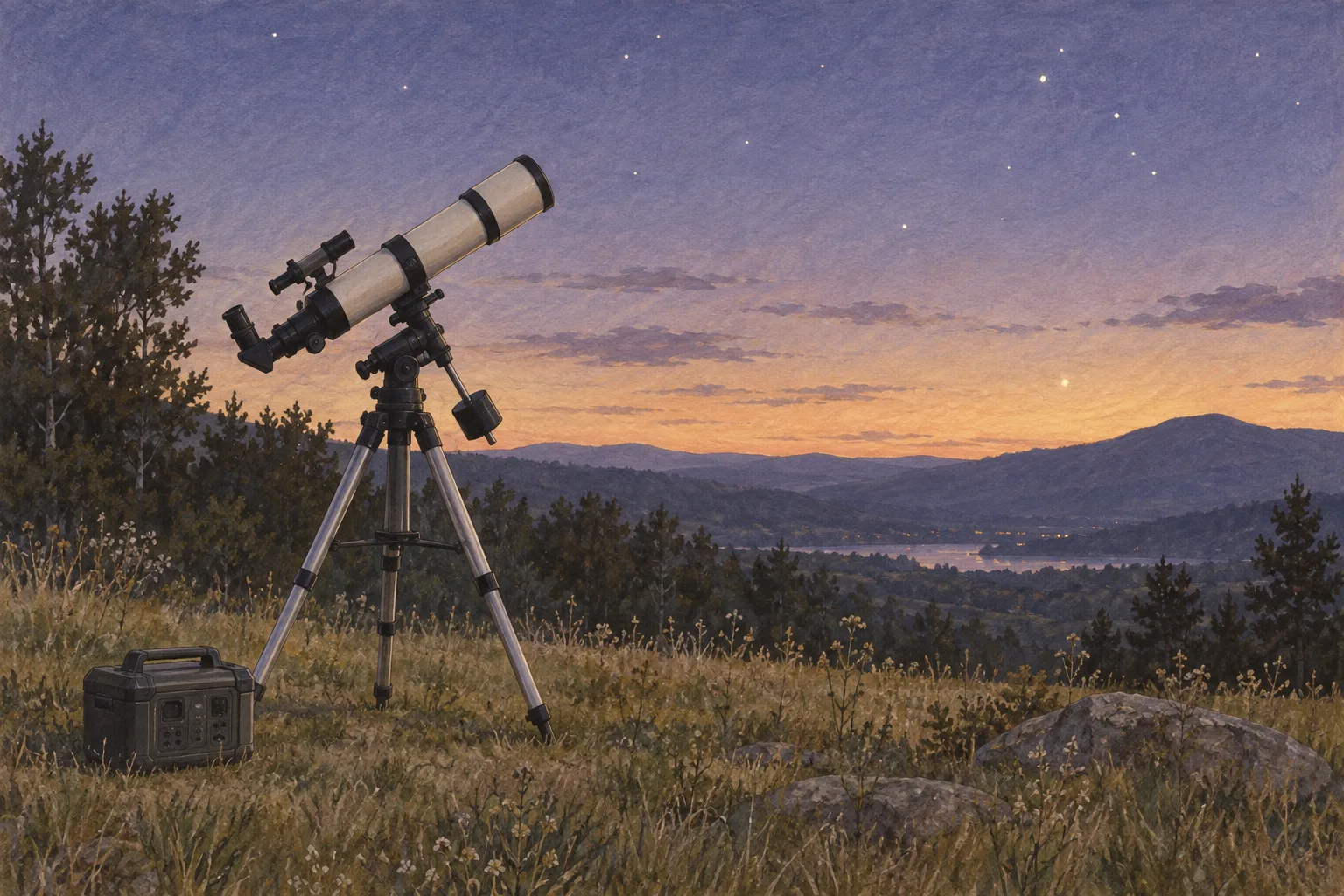
Power planning should start with a device list, not a battery headline. A rig can run normally for hours and still fail when dew heaters, mount movement and camera cooling peak together.
A self-contained smart telescope moves much of that power planning inside the instrument, though its stated runtime still depends on conditions and use. Compare published battery claims and complete kits in our beginner smart telescope comparison.
Record every load
List the mount, cooled camera, guide camera, focuser, control computer, network equipment, dew heaters and powered hubs. For each, record voltage, connector, polarity, normal draw and stated maximum draw.
Do not assume that equipment sharing the same connector also shares the same voltage or polarity. Label both ends of every field cable.
Separate energy from peak delivery
Watt-hours estimate runtime; maximum current determines whether the supply can handle simultaneous demand. Add realistic conversion losses and a reserve rather than planning to drain a battery to its advertised limit.
Cold conditions can reduce usable battery capacity, and long thin cables add voltage drop. Test the complete system at home with cooling and heaters operating, then measure voltage at the equipment end if instability appears.
Design the distribution
Use fused outputs appropriate to the cable and load. Avoid unsupported splitters and connectors that can be reversed accidentally. Secure cables so slews cannot pull on power sockets or wrap around the mount.
Where mains power is used, choose outdoor protection and residual-current safety appropriate to the location. If you are uncertain about mains installation, use a qualified electrician.
Plan graceful failure
Know which loads can be reduced first. Dew control can sometimes be adjusted, but turning it off entirely may end the session. Configure the computer and mount so a low-power event does not leave the telescope in an unsafe position.
Keep the final calculation with the rig: total normal watts, simultaneous peak current, expected runtime, reserve, fuse values and connector map.
Work through your own plan
Astrophotography battery runtime calculator
Will the telescope battery last through your planned night?
Astrophotography integration-time planner
Can the exposure plan fit inside the imaging window?
Darkness and Moon planning calendar
Which nights offer dark time with the Moon below the horizon?
Continue planning
Related guides
Optical train
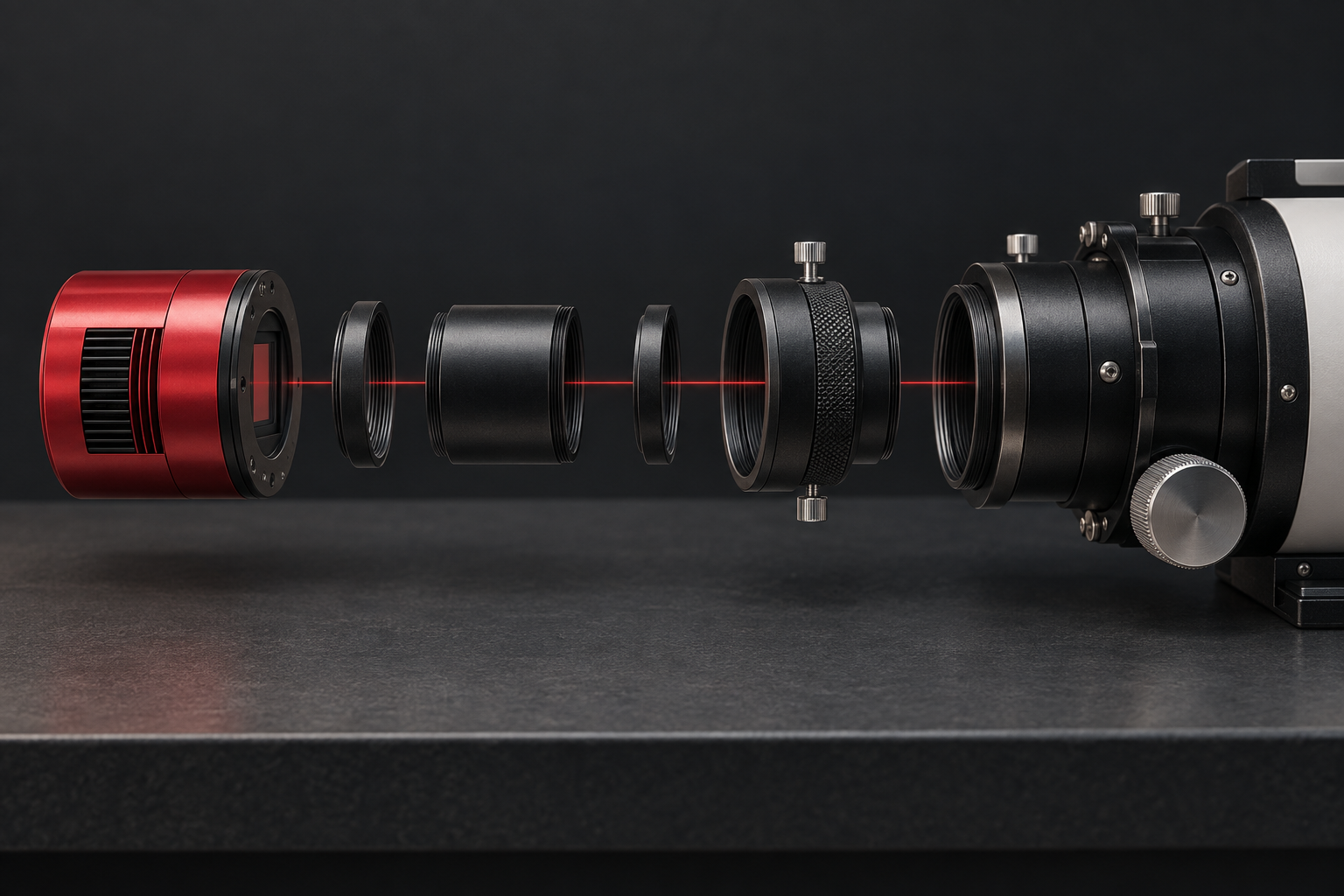
Backfocus and spacing without guesswork
Smart telescope comparison
Best smart telescope for beginners: see nebulae without building a rig
Family stargazing comparison