Filters · EU
Broadband or narrowband filters: start with sky and target
Choose an imaging filter strategy around target emission, local light pollution, camera type and available clear hours.
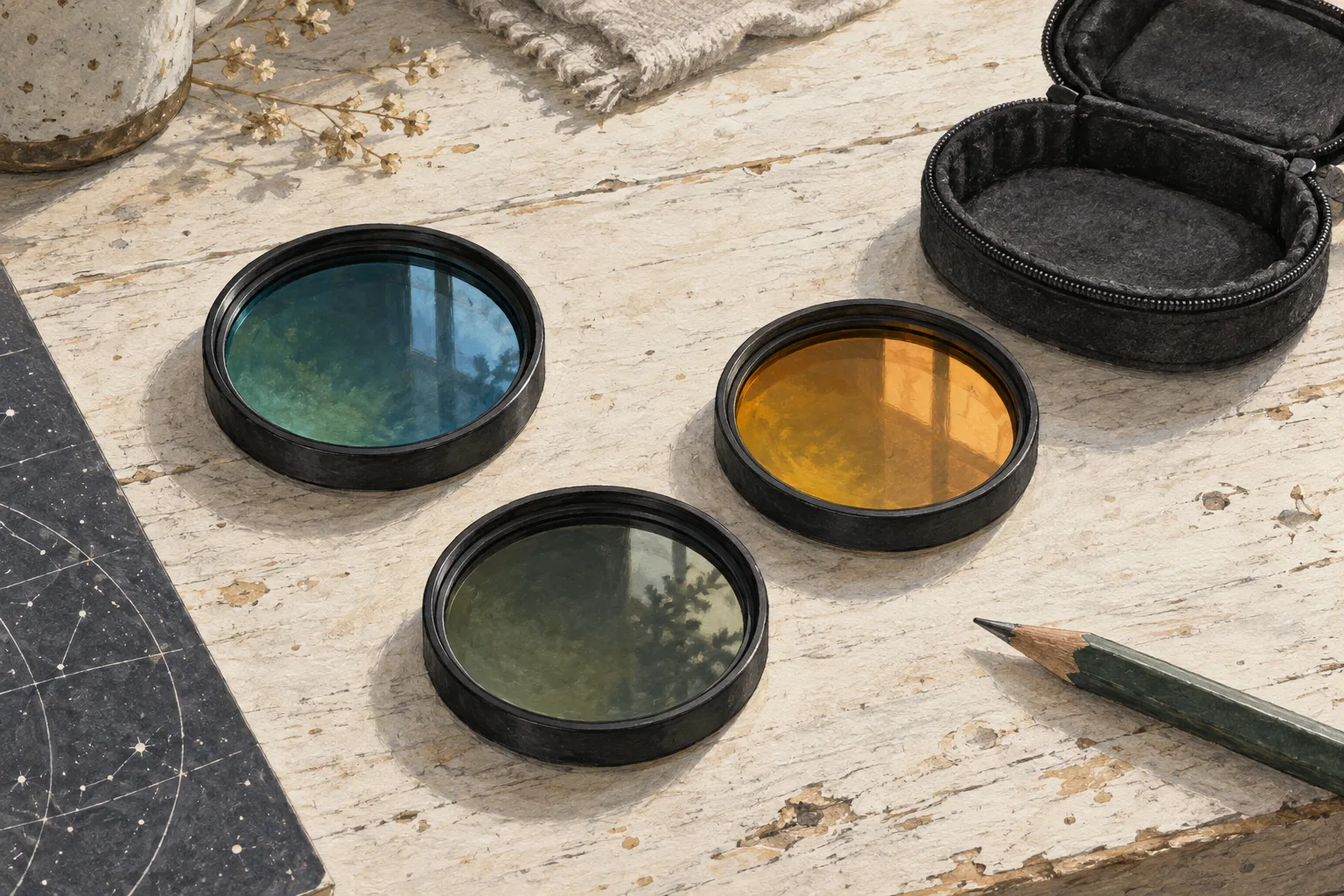
Filters do not create signal that is absent from the target. Their value depends on what the target emits, the camera in use and the unwanted light reaching the sensor.
Begin with target physics
Broadband targets such as galaxies, reflection nebulae and star clusters emit or reflect light across a wide spectrum. Aggressive filtering can remove some unwanted sky glow but also discards useful target light and may alter colour balance.
Emission nebulae concentrate more signal around particular wavelengths. Narrowband or multi-band filters can isolate those regions and improve contrast under many artificial skies, but they require compatible targets and enough exposure.
Match the camera
Monochrome cameras can record separate filtered channels efficiently but add a filter wheel, refocusing considerations and more processing steps. One-shot-colour cameras offer a simpler acquisition path; multi-band filters can separate selected emission regions imperfectly within the colour array.
Check filter size against the sensor, focal ratio and distance from the sensor. A filter that is too small or too far forward may vignette the corners.
Treat transmission charts as evidence
Compare measured passbands where available. Marketing names such as “light pollution” or “city” do not define a consistent spectral response. Confirm whether the filter passes the wavelengths your target and camera can record.
Include the whole workflow
Narrower filters can demand longer individual exposures, careful guiding and more total integration. They may also create halos around bright stars in some optical systems. Broadband imaging under darker skies can be simpler and more colour-faithful.
Choose a first filter for the targets you will actually image, not as a universal cure for every sky. Record why it fits the camera, optics and local conditions before comparing brands.
Work through your own plan
Astrophotography integration-time planner
Can the exposure plan fit inside the imaging window?
Darkness and Moon planning calendar
Which nights offer dark time with the Moon below the horizon?
Continue planning
Related guides
Power
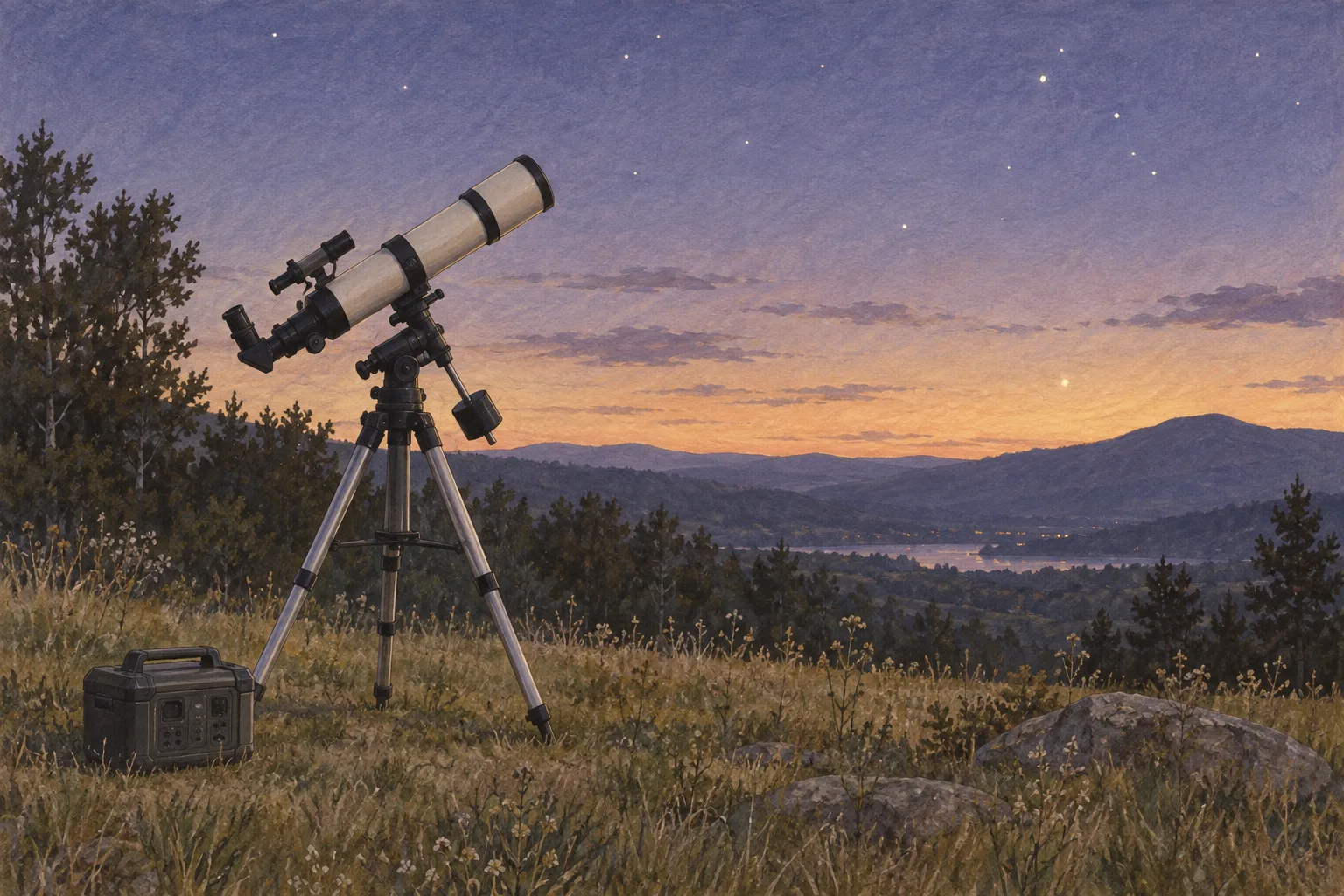
Build an astrophotography power budget that survives the night
Optical train
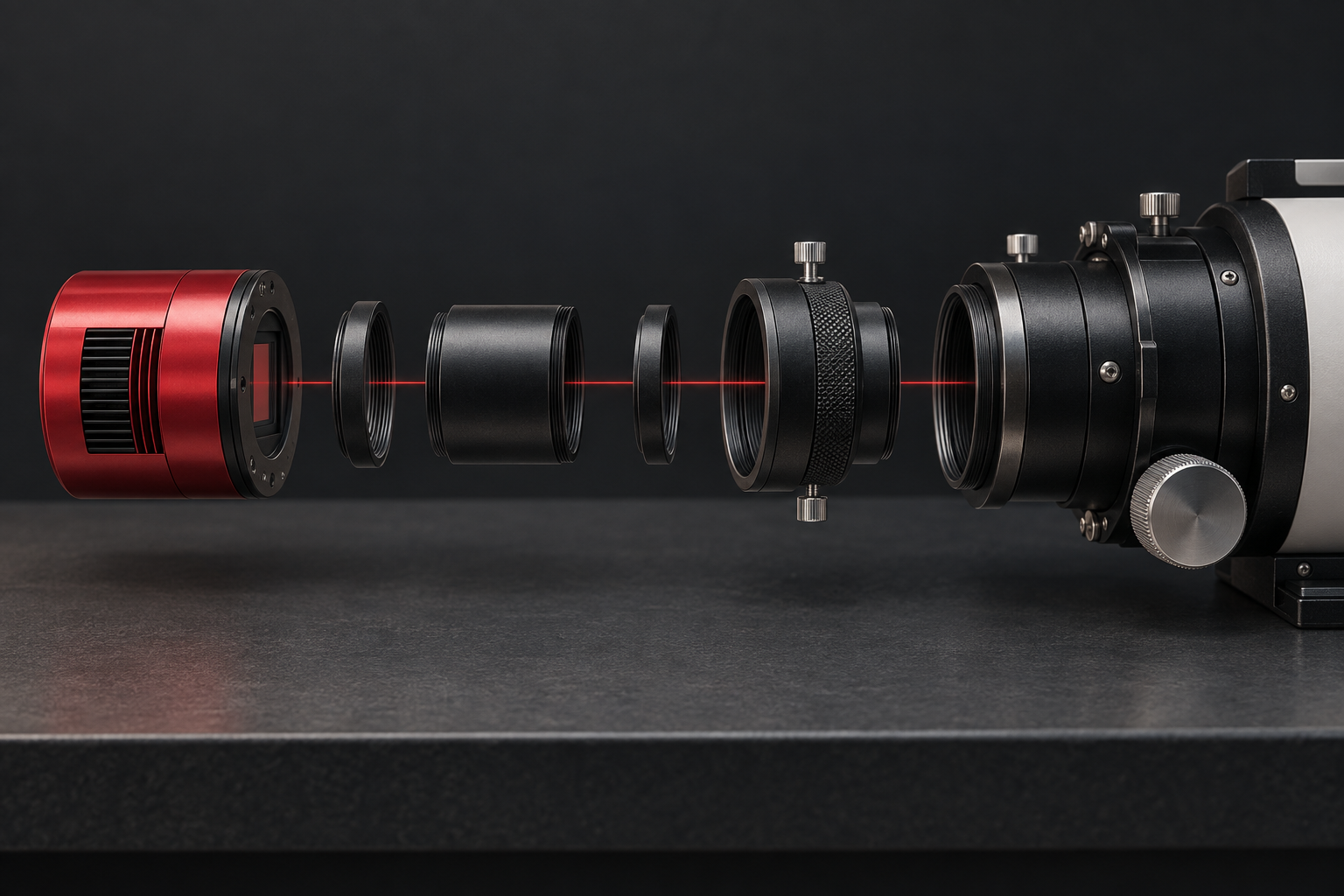
Backfocus and spacing without guesswork
Smart telescope comparison